The Imperative for Reasonable Accommodations in Delegate Physical Tests
The journey to becoming a "delegado" (a police chief or civil police delegate) in Brazil is rigorous, demanding not only intellectual prowess but often also a demonstration of physical aptitude. However, for candidates with disabilities, these physical tests – known as Testes de Aptidão Física (TAF) – frequently present an insurmountable barrier, not due to a lack of capability for the role, but due to a lack of reasonable accommodations. The issue of the teste físico delegado failing to adapt to diverse abilities highlights a critical need for re-evaluation and the enforcement of existing legal frameworks designed to ensure true inclusion.
Recent cases brought to light by determined candidates underscore a pervasive problem: talented individuals, fully qualified in other aspects, are being unfairly excluded from public service. These instances serve as powerful reminders that accessibility in public contests is not merely a matter of good practice, but a constitutional right enshrined in Brazilian law. When we discuss the physical aptitude tests for a delegate, it's essential to consider whether the tests truly measure the essential functions of the job or if they inadvertently create discriminatory hurdles for qualified candidates with disabilities.
Legal Frameworks Mandating Inclusive Physical Assessments
Brazil has robust legislation aimed at protecting the rights of persons with disabilities, yet its application in competitive examinations, particularly physical tests, remains a challenge. The cornerstone of this legal protection is the Estatuto da Pessoa com Deficiência (Law nº 13.146/2015), often referred to as the Brazilian Statute for the Inclusion of Persons with Disabilities. This statute explicitly mandates that public administration must provide reasonable accommodations in public contests. Complementing this is Decree nº 9.508/2018, which further details how these accommodations should be implemented.
Beyond these foundational laws, the Supreme Federal Court (STF) has solidified this understanding. In the landmark judgment of ADI 6.476, the STF unequivocally declared the unconstitutionality of interpretations that exclude the right of candidates with disabilities to reasonable accommodations in public physical tests. Crucially, it also deemed unconstitutional the generic submission of candidates with and without disabilities to the same physical criteria without a clear demonstration of its necessity for the exercise of the public function. The STF's position reinforces that the compatibility of a candidate's disability with the intended role should primarily be assessed during the probationary period, focusing on their actual performance of job duties, rather than through potentially discriminatory pre-employment physical hurdles. This comprehensive legal framework provides a strong basis for challenging unfair exclusionary practices and advocating for adaptive assessments in any teste físico delegado.
Real-World Cases Highlighting the Accommodation Gap
The theoretical ideal of legal protection often clashes with practical reality, as exemplified by several poignant cases:
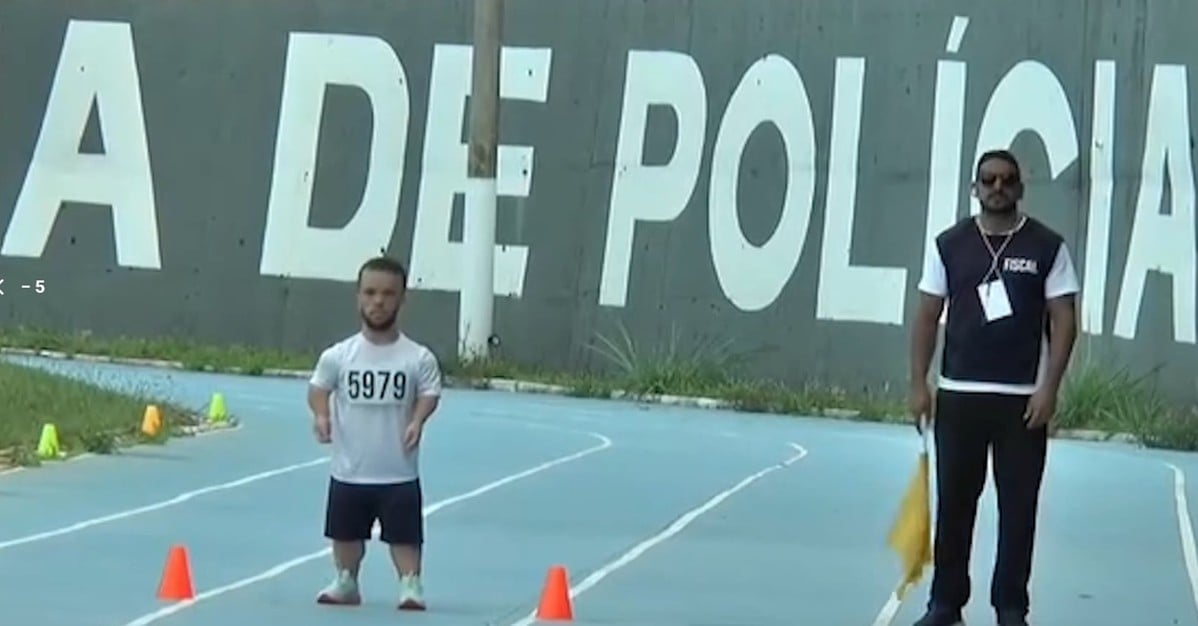
- The Case of Matheus Menezes: A 25-year-old law graduate with dwarfism, Matheus Menezes, faced discrimination during the TAF for a Civil Police Delegate (PCMG) position in Minas Gerais. Despite his academic qualifications, he was eliminated after failing to meet the minimum index for the horizontal impulse test. His elimination occurred without any adaptation for his condition, a clear violation of the Estatuto da Pessoa com Deficiência. Matheus's story, unfortunately, is not unique, reflecting a systemic failure to implement mandated accommodations. The standard teste físico delegado was not designed with such variations in mind.
- TRF1's Ruling for a Candidate with Neuropathy: In a more positive outcome, the 6th Panel of the Regional Federal Court of the 1st Region (TRF1) intervened to protect a candidate with hereditary motor and sensory neuropathy. This candidate was initially eliminated from a public contest for a Judicial Police Agent position after failing the running test, completing 1,850 meters in 12 minutes – just 150 meters short of the required distance for able-bodied candidates. She had passed all other physical tests (pull-ups, sit-ups, and push-ups) without adaptation. After her initial request for a new, adapted test was denied, the TRF1 ruled in her favor, citing the Estatuto da Pessoa com Deficiência and the aforementioned STF understanding. The court determined that she had the right to a new, reasonably adapted running test and to proceed to subsequent stages of the selection process. This decision set a crucial precedent, affirming that adaptations are not merely optional but a legal obligation. This case also highlights that minor shortfalls, if unaccommodated, can unjustly disqualify otherwise capable candidates.
These instances underscore the ongoing battle between entrenched administrative practices and the evolving legal understanding of disability rights. They demonstrate why candidates often need to resort to legal action to enforce their entitlements to a fair and inclusive teste físico delegado.
What Constitutes "Reasonable Accommodation" in Physical Tests?
The concept of "reasonable accommodation" is central to these discussions. It doesn't mean lowering essential job standards or granting an unfair advantage. Instead, it refers to necessary and appropriate modifications and adjustments that do not impose a disproportionate or undue burden, ensuring that persons with disabilities can enjoy or exercise all human rights and fundamental freedoms on an equal basis with others.
For physical tests, this could involve several approaches:
- Modifying Test Execution: For instance, allowing a candidate with dwarfism to perform a horizontal jump from a slightly elevated platform if their limb length naturally disadvantages them in the standard execution, provided the core physical capacity (explosive power) is still measured appropriately.
- Adjusting Performance Metrics: As seen in the running case, a slight adjustment to distance or time might be considered reasonable if the shortfall does not fundamentally impair the essential functions of the job. The focus should be on *functional capacity* for the role, not rigid adherence to a generalized standard.
- Alternative Test Formats: If a specific test component is inherently inaccessible, an alternative test that measures the same physical attribute or skill necessary for the job should be considered. For example, if an upper body strength test is required, but a standard pull-up is impossible due to a specific disability, a modified weight-lifting exercise might be an equivalent measure.
- Expert Consultation: Engaging medical professionals, rehabilitation specialists, and disability advocates to design and implement appropriate accommodations.
- Individualized Assessment: Recognizing that disabilities manifest differently, accommodations should be tailored to the individual's specific needs and the essential requirements of the delegate position.
The core challenge lies in distinguishing between the essential physical demands of a delegate's job and arbitrary test criteria. A delegate's role, while requiring presence and potentially some physical intervention, is largely focused on investigative, legal, and administrative duties. Therefore, the TAF should primarily assess abilities directly related to these functions, ensuring the delegate can perform their duties effectively without creating unnecessary barriers based on physical differences.
For more detailed insights into this topic, you might find valuable information in Adapted Physical Tests: A Right for Disabled Candidates in Public Contests and Discrimination in TAF: Legal Victories for Disabled Candidates.
Impact and Future Outlook for Inclusive Public Service
The drive for reasonable accommodations in the teste físico delegado and other public contests goes beyond mere legal compliance; it's about fostering a more diverse, equitable, and representative public service. When qualified individuals are excluded due to unadapted physical tests, society loses out on their talent, perspectives, and contributions. An inclusive public service reflects the diversity of the population it serves, enhancing its legitimacy, effectiveness, and ability to address a wider range of societal needs.
Moving forward, it is crucial for public administration bodies to proactively review and revise their physical aptitude tests. This includes:
- Pre-emptive Design: Designing tests from the outset with accessibility in mind, rather than retrofitting accommodations.
- Clear Guidelines: Providing clear, accessible guidelines for candidates with disabilities on how to request and obtain accommodations.
- Training for Evaluators: Ensuring that TAF evaluators are trained on disability awareness, the legal mandates for accommodation, and how to implement adapted tests fairly.
- Continuous Review: Regularly assessing the relevance of physical test components to the essential job functions of a delegate.
These efforts will not only reduce the incidence of discrimination but also streamline the recruitment process, allowing deserving candidates to contribute their skills to critical public roles without unnecessary legal battles. The ultimate goal is to create a system where a candidate's disability is seen as a characteristic to be accommodated, not a barrier to public service.
Conclusion
The conversation around the teste físico delegado and the need for reasonable accommodations for candidates with disabilities is a testament to the ongoing evolution of justice and inclusion. While legal frameworks are firmly in place to protect these rights, their consistent and fair application remains an area requiring vigilance and advocacy. The stories of Matheus Menezes and the TRF1 candidate serve as powerful reminders of both the challenges faced and the victories that can be achieved through legal recourse. By embracing reasonable accommodations, public administration can ensure that physical tests truly measure a candidate's ability to perform the essential duties of a delegate, rather than inadvertently excluding skilled and dedicated individuals who are ready to serve their communities.