Adapted Physical Tests: A Right for Disabled Candidates in Public Contests
The path to public service, particularly for demanding roles like a police chief or “delegado,” often involves rigorous physical aptitude tests (TAF). While these evaluations are crucial for ensuring candidates possess the necessary physical capabilities, they frequently become an insurmountable barrier for individuals with disabilities when conducted without due consideration or adaptation. This article delves into the critical need for adapted physical tests, specifically focusing on the challenges faced by disabled candidates in high-stakes public contests such as the delegate contest physical tests, asserting their fundamental right to reasonable accommodations as mandated by law and judicial precedent.
The concept of inclusion dictates that public service should be accessible to all qualified individuals, irrespective of their physical condition, provided they can perform the essential functions of the job with appropriate support. Unfortunately, many examining boards still apply a one-size-fits-all approach to physical evaluations, leading to unfair eliminations and prompting legal challenges. The central issue revolves around the legal obligation to provide reasonable adaptations, ensuring that the physical test assesses capability relevant to the role, rather than inadvertently discriminating against those with disabilities.
The Legal Imperative: Foundations for Inclusive Public Contests
In Brazil, the legal framework for protecting the rights of persons with disabilities in public contests is robust, though its application sometimes lags. Key legislation and judicial interpretations underscore the necessity of adapted physical tests:
- The Brazilian Disability Statute (Law nº 13.146/2015): This landmark legislation is foundational. It explicitly mandates that public administration must ensure reasonable accommodations in all stages of public contests. Reasonable accommodations are defined as necessary and appropriate modifications and adjustments that do not impose a disproportionate or undue burden, where needed in a particular case, to ensure that persons with disabilities enjoy or exercise human rights and fundamental freedoms on an equal basis with others.
- Decree nº 9.508/2018: This decree further details the application of the Disability Statute within public administration, reinforcing the duty to provide reasonable adaptations in physical examinations for public service.
- Supreme Federal Court (STF) Ruling – ADI 6.476: This is a pivotal judicial decision. The STF declared the unconstitutionality of interpretations that exclude the right of candidates with disabilities to reasonable adaptations in physical tests. Critically, it also deemed unconstitutional generic submissions of disabled and non-disabled candidates to the same criteria in physical tests without demonstrating its necessity for the exercise of the public function. The STF clarified that the examination of compatibility between a candidate's disability and the intended position should primarily occur during the probationary period, focusing on the actual performance of job duties, rather than solely on a rigid, pre-entry physical assessment. This ruling significantly shifts the burden onto public entities to justify their physical test requirements and to actively seek adaptations.
These legal instruments collectively establish a clear mandate: public contest organizers cannot arbitrarily eliminate candidates based on their disability if reasonable adaptations would allow them to demonstrate the necessary physical aptitude for the role. The focus must be on the essential functions of the job and whether the candidate can perform them, with or without accommodation, not on a generic, undifferentiated set of physical metrics.
Real-World Challenges and Legal Victories for Disabled Candidates
Despite the clear legal framework, disabled candidates frequently encounter significant hurdles, often being forced to seek legal recourse to assert their rights. The cases of Matheus Menezes and an unnamed candidate for the Judicial Police illustrate these challenges and the eventual legal victories that pave the way for greater inclusion.
The Case of Matheus Menezes: Aspiration for Delegado
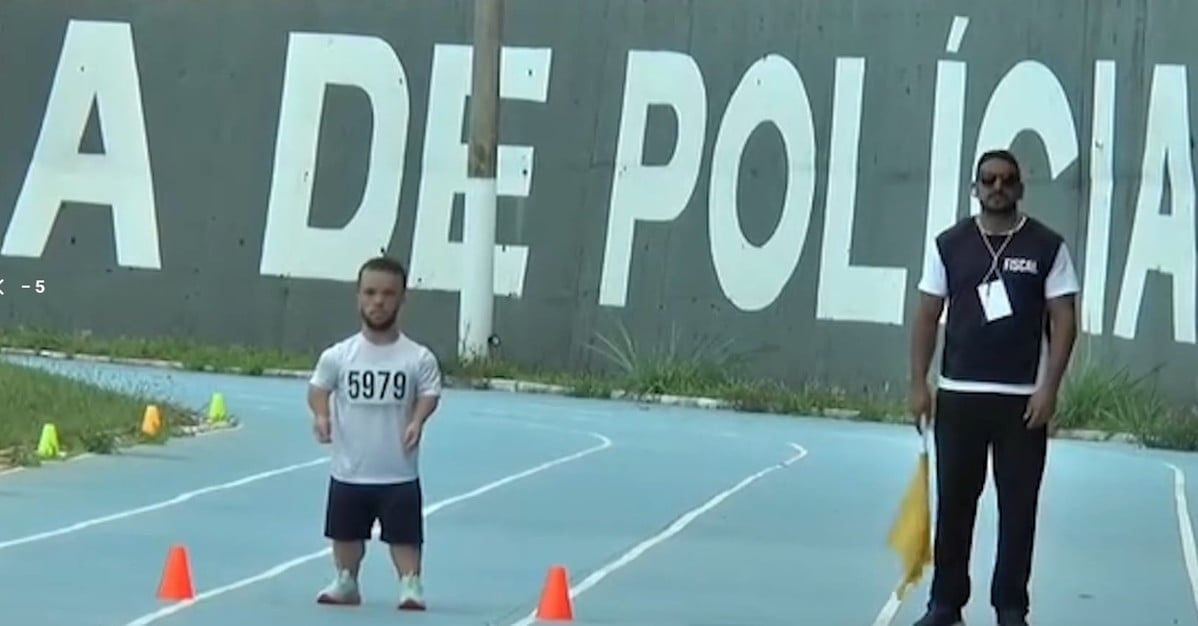
Matheus Menezes, a 25-year-old law graduate with dwarfism, faced a stark example of this systemic issue during the physical aptitude test (TAF) for the position of a delegado (civil police chief) in Minas Gerais (PCMG). Matheus was eliminated after failing to meet the minimum index required in the horizontal impulse (long jump) test. His claim of discrimination stemmed from the fact that no adaptation was provided for his condition, despite being explicitly foreseen by the Disability Statute. For a candidate with dwarfism, a test like horizontal impulse, designed for individuals of average stature, inherently presents a disproportionate challenge unrelated to their capacity to perform the intellectual and investigative duties of a police chief. His experience highlights the crucial distinction between essential job functions and arbitrary physical metrics.
The Judicial Police Agent Candidate: Running Towards Justice
Another compelling case involved a candidate with hereditary motor and sensory neuropathy who was eliminated from a public contest for a Judicial Police Agent position. This candidate successfully passed all other physical tests (pull-ups, sit-ups, and push-ups) without any adaptations, but fell short in the running test, completing 1,850 meters in 12 minutes – just 150 meters less than the required 2,000 meters for able-bodied candidates. Her request for a new, adapted test was initially denied in the first instance, leading her to appeal.
The 6th Panel of the Regional Federal Court of the 1st Region (TRF1) intervened decisively. Federal Judge João Carlos Mayer Soares, acting as rapporteur, emphatically cited the Disability Statute, Decree 9.508/2018, and the STF's ADI 6.476 ruling. The court unanimously overturned the administrative act that declared her unfit, ensuring her right to a new running test with suitable adaptation. This decision not only suspended her elimination but also guaranteed her continued participation in the remaining stages of the contest, with potential reservation of a vacancy. This outcome is a testament to the power of legal recourse in enforcing the right to adapted physical tests and underscores the judiciary's role in upholding inclusive principles in public employment. Such legal victories are vital, offering hope and precedent for countless other candidates navigating similar situations. For more insights on legal battles, consider reading Discrimination in TAF: Legal Victories for Disabled Candidates.
Navigating the System: Tips for Candidates and Administrators
To foster a truly inclusive environment, both candidates and public administration bodies must understand their roles and responsibilities regarding adapted physical tests.
For Disabled Candidates: Empowering Your Journey
- Know Your Rights: Familiarize yourself with the Brazilian Disability Statute (Law nº 13.146/2015), Decree nº 9.508/2018, and the STF's ADI 6.476 ruling. These documents are your strongest allies.
- Seek Medical Documentation: Obtain comprehensive medical reports detailing your condition, its impact on specific physical activities, and recommendations for reasonable accommodations. Expert opinions from specialists can strengthen your case.
- Proactive Communication: Inform the examining board about your disability and the need for adaptation well in advance, preferably during the application process. Do not wait until the day of the test. Submit formal requests.
- Understand the Job Description: Research the essential functions of the role you are applying for. This will help you argue why certain adaptations do not compromise your ability to perform the core duties. For a teste físico delegado, emphasize intellectual, leadership, and investigative skills.
- Be Prepared for Legal Action: If your request for adaptation is denied unfairly, be ready to pursue legal avenues. Consult a lawyer specialized in public contests and disability rights. The legal precedents are in your favor.
For Public Administration and Examining Boards: Building an Inclusive System
- Proactive Compliance: Do not wait for judicial intervention. Integrate reasonable accommodations into your contest edicts from the outset. This demonstrates commitment to inclusion and reduces legal risks.
- Consult Disability Experts: Engage with specialists in disability inclusion, physical education, and occupational therapy to design physical tests that are fair, relevant, and adaptable.
- Focus on Essential Job Functions: Redesign physical tests to assess abilities directly related to the critical duties of the position. For a teste físico delegado, consider the actual physical demands in the field versus arbitrary athletic feats. Are push-ups or a specific jump truly indicative of one's ability to lead investigations or manage police operations?
- Individualized Assessment: Move away from generic, blanket requirements. Be prepared to conduct individualized assessments for candidates requesting accommodations. This might involve alternative test formats, adjusted parameters, or assistive technologies.
- Transparency: Clearly outline the procedures for requesting and evaluating reasonable accommodations in your public notices. Provide contact points for candidates with disabilities.
- Training: Educate all personnel involved in contest organization and evaluation about disability rights, inclusive practices, and the legal obligations regarding accommodations.
Conclusion: Towards a More Equitable Public Service
The journey towards an inclusive public service, where individuals with disabilities are judged on their capabilities rather than arbitrary physical standards, is an ongoing one. The cases of Matheus Menezes and the Judicial Police Agent candidate serve as powerful reminders of both the systemic challenges and the judicial commitment to upholding the rights of disabled candidates. The legal framework in Brazil is clear: reasonable accommodations in adapted physical tests are not a concession but a fundamental right. For the prestigious role of a teste físico delegado, or any other public position, the focus must shift from exclusionary physical barriers to an equitable evaluation of a candidate's genuine ability to contribute effectively. By embracing proactive compliance, individualized assessment, and a deep understanding of the law, public administration can truly open its doors to a diverse talent pool, enriching public service for the benefit of all citizens.